Why Products Need Feedback Loops
- Products
- Thoughts
Shipping is the start of a conversation
An idea can feel complete while it lives in your head. Put it in front of another person and all the missing context becomes visible.
That is useful. A confusing label, a slow operation, or an unexpected use case gives you something concrete to improve.
Make the loop small
A useful feedback loop does not need a dashboard full of metrics. It can be a short sequence:
- Pick one problem.
- Make a small change.
- Watch someone try it.
- Write down what happened.
- Decide what to keep, change, or remove.
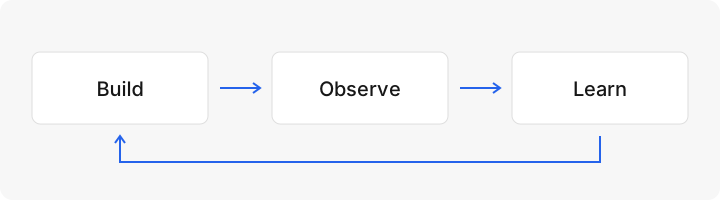
The key is to finish the loop. Shipping without observing makes it hard to learn. Collecting feedback without making a decision leaves the product standing still.
Listen for the underlying task
Feature requests often describe a proposed solution. The more useful question is what the person was trying to accomplish before they asked for it.
Treat feedback as evidence to understand, rather than a queue to implement.
A request for more settings might mean the default is wrong. A request for an export might mean the tool is missing a step in the user’s existing workflow.
Keep a decision log
A few sentences are enough: what you noticed, what you changed, and what you expect to happen. That makes the next observation easier to interpret.1
This sample essay is a place to begin. Real examples from building LAVU can turn the general idea into something more useful.
Footnotes
-
A plain Markdown file works well. The important part is keeping the observation next to the decision it informed. ↩